How Long Do Seawalls Really Last on the Gulf Coast? Answers From a Seawall Contractor in Pensacola, FL
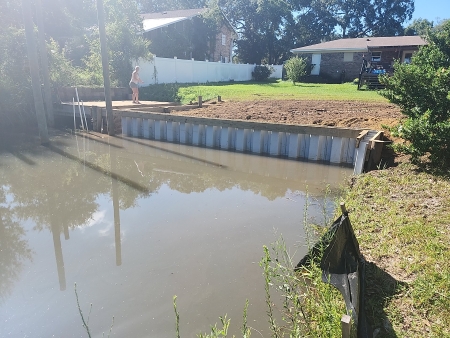
Homeowners along Pensacola Bay, Santa Rosa Sound, and the Intracoastal Waterway often ask how long a seawall should last. The true answer depends on design, materials, and the power of wind, waves, and boat wake. If you are thinking about a new wall or planning repairs, explore our seawall and bulkhead construction solutions to see what a durable build looks like in our waters.
In this guide, Orange Beach Pile Protection explains common lifespan ranges, what shortens or extends service life on the Gulf Coast, and how smart choices up front can save years of headaches later.
What Determines a Seawall’s Lifespan in Pensacola, FL?
Seawalls live in a harsh place where saltwater, sun, storms, and shifting sand all push and pull. In the Pensacola area, conditions change fast between calmer canals in Tiger Point and open-water exposures near Pensacola Beach or Big Lagoon. Several factors work together to decide how long a wall will serve you.
- Water must be able to drain through the wall. Good filter fabric and weep holes reduce pressure behind the wall after heavy rain or a king tide.
- Toe protection matters. Riprap or bedding stone at the base protects against scour as waves eat away sand.
- Strong tie-backs and deadmen keep the wall upright. Corroded rods or undersized anchors shorten life.
- Material choice and coatings fight UV, rot, and rust in saltwater.
- Boat traffic and reflected wake in narrow canals speed up wear on caps and joints.
Engineering also plays a role. Proper embedment depth, cap thickness, panel interlocks, and returns at property corners all spread loads. In soft Panhandle sands, a deeper toe and correct spacing of anchors can be the difference between a wall that lasts decades and one that starts to lean after a few storm seasons.
Typical Lifespan Ranges By Material
Every site is unique, but these are common ranges our team sees along the Gulf Coast when walls are built right and maintained on schedule:
- Vinyl or composite panels: often a few decades in our climate, with many installations performing well into the long term when anchored and drained properly.
- Reinforced concrete: typically several decades when steel is well protected and caps are sealed against salt intrusion.
- Steel sheet pile: solid option for heavy-duty sites, with service life shaped by coating quality and corrosion control.
- Treated timber bulkheads: service life can be shorter in saltwater due to marine borers and UV, so they need closer monitoring.
Think of lifespan as a sliding scale. A sheltered canal with low wake and sandy soils can let a well-built vinyl wall serve for many seasons. An exposed reach of Santa Rosa Sound with daily boat chop and storm surge can cut years off a wall that lacks toe stone or proper drainage.
Climate And Site Factors Along The Florida Panhandle
The Gulf Coast gives and takes. Our bays and sounds are beautiful, but they challenge shoreline structures.
Salt and sun are constant. Salty spray and UV attack caps, fasteners, and coatings. Hydrostatic pressure builds fast after a summer thunderstorm dumps rain uphill of the wall. Winter fronts switch winds and push water levels up and down. During hurricane season, surge and waves can stack on top of each other and search for the wall’s weak points.
Local soils add to the puzzle. Areas around Bayou Texar, Bayou Chico, and Bayou Grande have fine sands and organic pockets. If the toe is shallow or anchors are too short, the wall can settle or bow. Sheltered canals in Gulf Breeze or Perdido Key see strong reflected wake from tight seawall lines, which rattles caps, loosens joints, and scours sand at the base. Do not ignore bulging or leaning panels; both are signs that pressure or scour is winning.
Maintenance That Extends Service Life
Good maintenance does not mean doing the work yourself. It means keeping a simple, professional plan and acting early. Small fixes and sealants at the right time help you avoid structural repairs later.
We recommend scheduling routine professional checks and documenting what changes year to year. That record helps you spot patterns after storms or king tides.
Call a pro if you notice any of the following:
- New hairline cracks in the cap, widening joints, or spalling concrete
- Sinkholes or soft spots behind the wall after heavy rain
- Rust staining near tie-rod locations or exposed metal at the cap
- Washed-out stone at the toe or panels settling unevenly
- Fences or pavers along the edge starting to tilt bayward
Small cracks today can become big failures tomorrow. A quick professional seal, a bit of added filter fabric, or refilling washed-out stone can slow down water and preserve the structure underneath.
Repair Or Replace? How To Decide
Think about the wall like a foundation. If the base and tie-backs are healthy, targeted repairs may add years. If the wall is leaning, has recurring sinkholes, or the toe is scoured away, replacement may be the safer path. A site visit lets our team probe soils, measure deflection, and check tie-back spacing so you can make a confident choice.
When repairs make sense, crews may seal caps, reset joints, add toe stone, or install additional anchors where access allows. When replacement is wiser, we design a wall that fits your site conditions and long-term goals. If you want to understand the build process, our seawall and bulkhead construction page shows how proper embedment, drainage, and toe protection come together in Pensacola waters.
Smart Design Choices For New Builds In Pensacola
Strong designs tend to share the same traits across our coast. The goal is to reduce pressure, stop scour, resist corrosion, and protect the cap from sun and impact.
Here are design features we often recommend for longevity:
- Continuous filter fabric and weep paths that keep soil in place while letting water out
- Correct panel embedment and a deeper toe in softer or high-energy areas
- Anchors placed to match calculated loads, not just a rule of thumb
- Cap details that shed water and seal against salt intrusion
- Riprap or bedding stone sized for local wave and wake conditions
If your property includes docks, lifts, or upland improvements, it helps when one team coordinates shore and upland scopes. Our broader marine construction experience keeps the whole waterfront working together, from the wall to the deck and access paths. For site flatwork and related support items, our general construction team aligns grades, drainage, and finishes so the wall is not fighting uphill runoff.
Neighborhood Conditions We See Most Often
No two shorelines are the same, yet patterns repeat around town. In East Hill and along Bayou Texar, tighter canals and reflected wake put steady stress on caps and joints. Along Santa Rosa Sound, steady wind fetch and boat traffic mean the toe needs special attention. Properties facing Big Lagoon and Perdido Key often see strong cross-waves that scour sand at corners and steps. Downtown Pensacola waterfronts may deal with older walls and mixed materials from past repairs, which call for careful evaluation before tying in anything new.
Storm season from June through November is the big test. Schedule a professional inspection after any named storm so small issues do not grow over the winter. A quick look at weep paths, caps, and toe stone right after major weather can reveal problems that stay hidden once tides return to normal.
How To Get More Years From An Existing Wall
You can often buy time for an aging wall with the right professional touches. Sealing and resurfacing caps, adding or resetting riprap, improving back-drainage, and addressing isolated panel movement can slow down wear. The key is matching the fix to the cause. If water is trapped behind the wall, focus on drainage. If the base is eroding, add toe protection sized for your exposure. If anchors are failing, consider supplemental tie-backs after structural evaluation.
Think in seasons. A spring assessment before hurricane season, plus a check after the first strong front in fall, creates a rhythm that protects your shoreline. Document what you find with photos and dates so patterns become clear over time.
When A New Wall Is The Best Investment
Some signs point toward replacement instead of repair. These include widespread lean, repeating sinkholes, advanced cap deterioration, and anchors or rods that are corroded across long runs. In those cases, a new design with proper embedment, stone toe, return walls at transitions, and modern materials can reset the clock and deliver peace of mind for years.
Design choices should fit the setting. Sheltered canals may do well with lighter sections and closer anchors to limit deflection. Open-water sites near Pensacola Beach often benefit from heavier sections, deeper toes, and upgraded caps. Your goals matter too. If you plan to add a dock or lift, we account for those loads so the wall and upland improvements work as one system.
Your Next Step With A Seawall Contractor In Pensacola, FL
If you are comparing options, start with a site visit and a clear plan. The fastest way to learn what your shoreline needs is to meet on site and review soils, exposure, and existing conditions together. You can also explore how our team approaches builds and repairs right here in Pensacola by visiting our seawall installation and repairs resource.
Homeowners often find us while searching for a seawall contractor in Pensacola, FL. That search leads to a conversation where we talk through goals, tides, boat traffic, and the look you want along the water. From there, we outline options that balance strength, appearance, and upkeep so you can choose with confidence.
Get A Seawall That Lasts With Orange Beach Pile Protection
Ready to protect your shoreline and add years to your wall’s service life? Call 850-532-5755 to schedule a site visit with Orange Beach Pile Protection. Our team will evaluate your property, explain options in plain language, and recommend the right path for long-term performance on the Gulf Coast.
When it is time to move forward, we bring the planning, equipment, and skilled crews to build it right the first time. Start the conversation today and see why your neighbors trust Orange Beach Pile Protection for shoreline work across Pensacola and nearby communities.