How Marine Construction Helps Protect Waterfront Property in Pensacola, FL
Owning a waterfront home in Pensacola, FL is a dream, but wind, waves, and tides never take a day off. The right blend of planning and marine construction services can turn that daily wear into a manageable, long-term strategy. With the Gulf only a squall away, smart choices now help your yard, dock, and foundation stay secure for years.
In neighborhoods from East Hill to Perdido Key, conditions shift fast. One high tide stacks on a south wind and you can watch inches of shoreline disappear. This guide explains how proven shoreline construction methods reduce erosion, cut storm risk, and keep your investment strong without overbuilding. You will see how each option works, where it fits best, and the simple upkeep that keeps it performing.
Why Waterfront Protection Matters On The Gulf Coast
Pensacola lives with tropical weather. Long fetch across the Gulf builds waves, and boat traffic in Santa Rosa Sound adds daily wake energy. Over time, that motion pulls sand and soil from the water’s edge. The first signs are subtle: a slumping lawn, exposed tree roots, or gaps under a walkway. Left alone, those small losses invite bigger problems around patios, pools, and foundations.
Waterfront protection is about controlling energy. Slow the water down or stop it from reaching fragile soil, and erosion drops. That can be a hard barrier like a seawall, a sloped rock revetment that absorbs wave force, or a living shoreline that uses plants and natural materials to anchor soil. Done well, each option fits the lot, the waterbody, and the homeowner’s goals.
What Marine Construction Covers For Pensacola Homes
Marine construction is a wide toolkit, and no two lots need the same mix. A typical project may include one or more of the following:
- Seawalls and bulkheads to block waves and hold soil in place
- Rock revetments to absorb energy along sloped shorelines
- Boardwalks, docks, and boat lifts designed to handle wake and tides
- Retaining elements and caps that keep backfill stable
- Drainage and filter fabrics that let water out while keeping soil in
Plenty of homeowners also tie in new walkways or small structures. When your project touches land-based work too, pairing it with general construction can streamline schedules and finishes.
Seawalls, Bulkheads, And Revetments: Picking The Right Shield
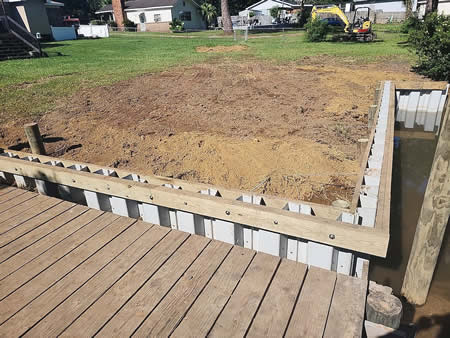
Seawalls and bulkheads give firm, vertical control. They are common along canals, deeper bayfronts, and spots where yard space is tight. Materials vary and selection depends on exposure, soil, and aesthetics. A well-built wall includes tie-backs, drainage, and a cap to spread loads. This delivers strong seawall protection when waves reflect off the face and the backfill stays dry.
Revetments are sloped armoring made of rock or interlocking blocks. They shine along open shorelines of Pensacola Bay and the windward sides of Santa Rosa Sound. Water flows through, the slope absorbs force, and the shoreline stays put. Revetments often blend well with native plantings, which is a bonus for views and habitat.
In lower-energy coves like parts of Bayou Texar or Bayou Chico, a living shoreline can stabilize banks with layered natural materials and marsh plants. It will not stop a tall storm wave the way a wall can, but it reduces day-to-day erosion and improves water quality. Choosing between these options is not about which one is “best.” It is about the right fit for your water depth, fetch, boat traffic, and soil.
Local insight: The strongest wind events usually line up with seasonal fronts and late-summer storms. Plan shoreline construction so the most exposed work happens during calmer weather windows. Your crew can time materials and equipment around tides to reduce delays.
Local Factors In Pensacola, FL That Change The Plan
Every site has its own fingerprint. The mix of bay tides, boat wakes, salinity, and soil type shifts from Pensacola Beach to Gulf Breeze and up into Escambia Bay. A narrow lot on a canal may demand a compact seawall. A broad, gently sloped yard on the Sound might benefit more from a rock revetment and native grasses near the toe.
Two variables matter most: exposure and elevation. If your lawn sits low, even a routine high tide can creep into the backfill. That steady saturation weakens soil and invites settlement. If your shoreline faces open water, peak waves and wakes drive impact loads. Ignoring either factor leads to premature wear and extra maintenance.
Soil tells a story too. Sandy banks drain fast but move easily. Clay holds water and can slump if loads are not spread. A proper design uses geotextiles, drains, and tie-backs where needed, and it matches wall height or rock size to the real forces on your site.
Construction Process: From Site Assessment To Final Cap
A smooth project follows a clear sequence. You will see each step build on the last so the final structure works as one system:
- Site visit and measurements to document water depths, shoreline slope, and nearby structures
- Design recommendations that match wave energy, soil conditions, and long-term maintenance goals
- Permitting coordination as required by local and other authorities, which can vary by property and scope
- Scheduling around tides and weather to protect sensitive areas and keep the site tidy
- Construction with proper backfill, drainage, fasteners, and corrosion protection
- Final cap, grading, and stabilization with rock or plantings as appropriate
Good crews keep the work zone organized and communicate around tides and deliveries. Clean staging and proper access protect lawns, trees, and neighbors’ property. Well-managed projects finish faster and reduce surprises later.
Maintenance That Extends Waterfront Lifespans
Waterfront protection is not “set it and forget it.” Simple habits keep your investment in top shape. After major wind events, walk the line and look for cracks in caps, missing rocks, or soil loss behind a wall. Check tie-back areas, posts, and fasteners for corrosion. Light fixes done early avoid bigger repairs.
Watch the water side too. Marine growth can trap debris and redirect flow. If you notice scouring at the base of a wall or along the toe of a revetment, call for an assessment. Small voids become big voids fast when daily waves pump water in and out of the same pocket.
Expect natural weather cycles. Even with strong waterfront protection, the shoreline will move a little over time. The goal is slow, predictable change you can manage. Most owners schedule checkups before and after hurricane season so small tweaks keep everything tight.
Sustainable Choices That Still Guard Your Shoreline
Eco-friendly does not mean flimsy. Living shorelines, sills, and marsh plantings can pair with rock or low walls to create flexible systems. In quieter pockets of Bayou Texar or inland canals, native grasses and coir logs slow water, trap sediments, and build a greener edge. In more exposed spots, a revetment with plantings above the toe blends durability and habitat.
These approaches can improve water clarity and reduce reflected wave energy. They also look great from the porch. The smartest protection often mixes natural and built elements so your property gets defense and curb appeal at the same time.
Real-World Examples You Can Picture
Picture a canal lot near Pensacola Beach where yard space is tight. A reinforced seawall with proper weep holes and a concrete cap holds the line, while a narrow walkway finishes the edge. Drainage and geotextiles keep the backfill dry and locked in place. The vertical face maximizes usable space and blocks daily boat wakes that ricochet down the canal.
Now, picture an open-water lot along Santa Rosa Sound. Here, a sloped rock revetment paired with salt-tolerant grasses along the upper bank absorbs wave action. The rocks break up force, and water filters through instead of bouncing back. Over time, roots knit the soil and create a natural look that still performs when winds build.
How Design Choices Balance Safety, Views, And Access
Owners want strength without losing the view. Low-profile caps, color-matched materials, and tidy transitions to lawns keep sightlines clean. Stairs or ramps can be built into the design for kayak or small-boat access. Where docks are planned, spacing and piling placement should respect the shoreline structure so the two elements work together, not against each other.
Remember, details drive results. Cap height, top-of-wall alignment, rock size, and filter layers all matter. When each piece supports the next, you get consistent shoreline construction that handles daily conditions and holds up when weather turns.
When To Call A Pro For An Assessment
If your lawn edge looks uneven, if soil is pulling away from hard surfaces, or if you see sinkholes behind a wall, it is time to bring in help. A quick site review can tell whether you need spot repairs, added rock at the toe, or a full upgrade. That small visit protects larger structures like pools, patios, and foundations near the water.
Homeowners in Cordova Park, East Hill, and Gulf Breeze often schedule a spring check so any fixes happen before summer storms. An assessment also confirms whether boat wakes, not just wind waves, are driving the damage. That one insight shapes the right solution and keeps your dollars focused.
Choosing A Partner You Can Trust
Look for a team with experience across Pensacola’s mix of canals, bays, and sounds. Ask about materials, drainage plans, tie-backs, and how they phase work around tides. A contractor should explain options in plain language and show how each design manages the energy at your site.
It also helps to pick one group that can coordinate shoreline protection with light structural or landscape touches. That way your edges, paths, and waterfront access line up cleanly and age together. If questions pop up, the same crew stands behind the whole project.
Get Waterfront Protection That Fits Your Property
Your shoreline has a unique set of forces at work. When you match the solution to those forces, you get lasting waterfront property protection without overbuilding. If you are ready to explore options, our marine construction team can walk the site, explain tradeoffs, and outline a clean path forward.
Learn more about marine construction in Pensacola, FL from Orange Beach Pile Protection, or coordinate land-based improvements through our general construction services so everything finishes with one look. To start a plan that fits your lot and your timeline, call 850-532-5755. When you are ready to begin, review what we build and how we work on our marine construction services page and schedule a visit with our team.